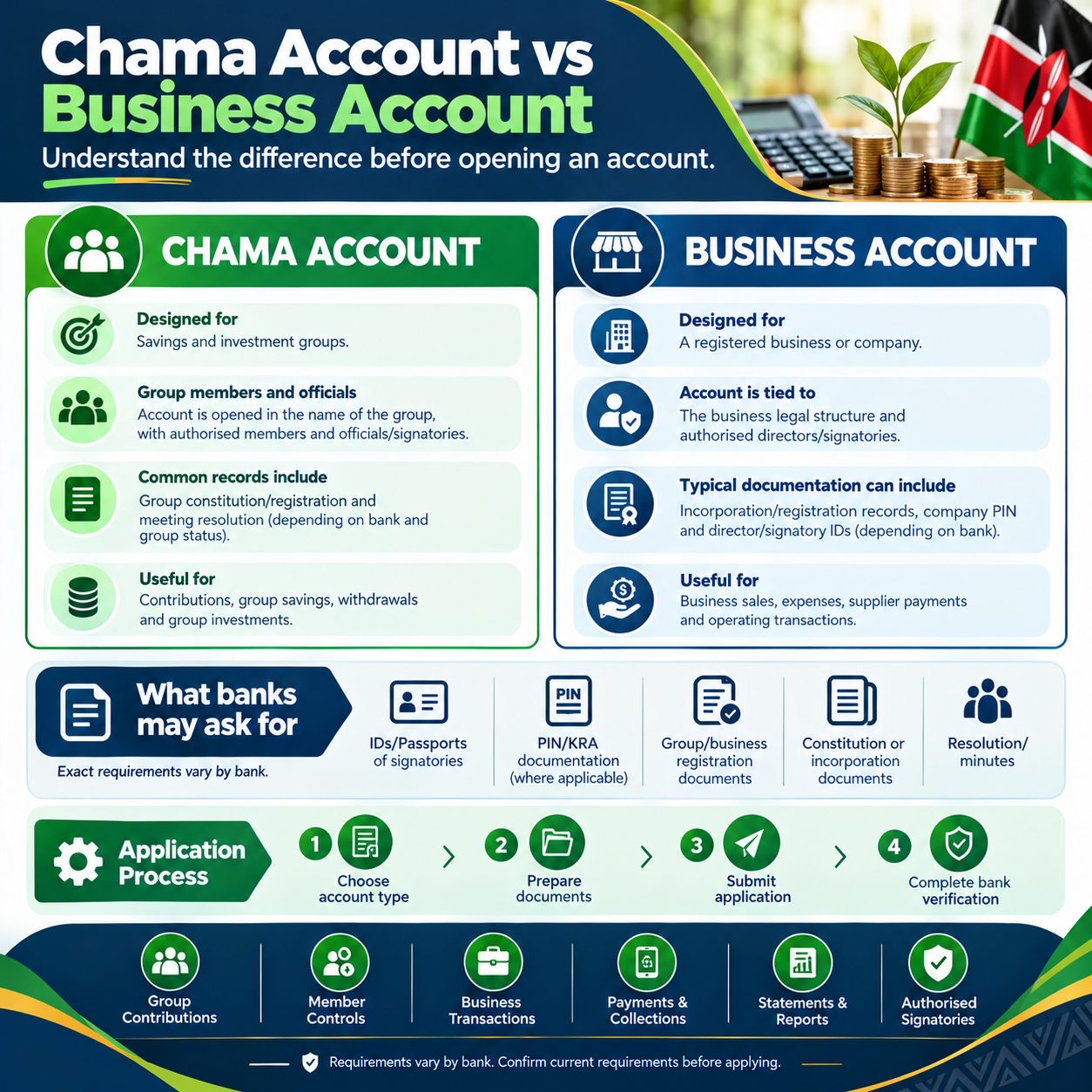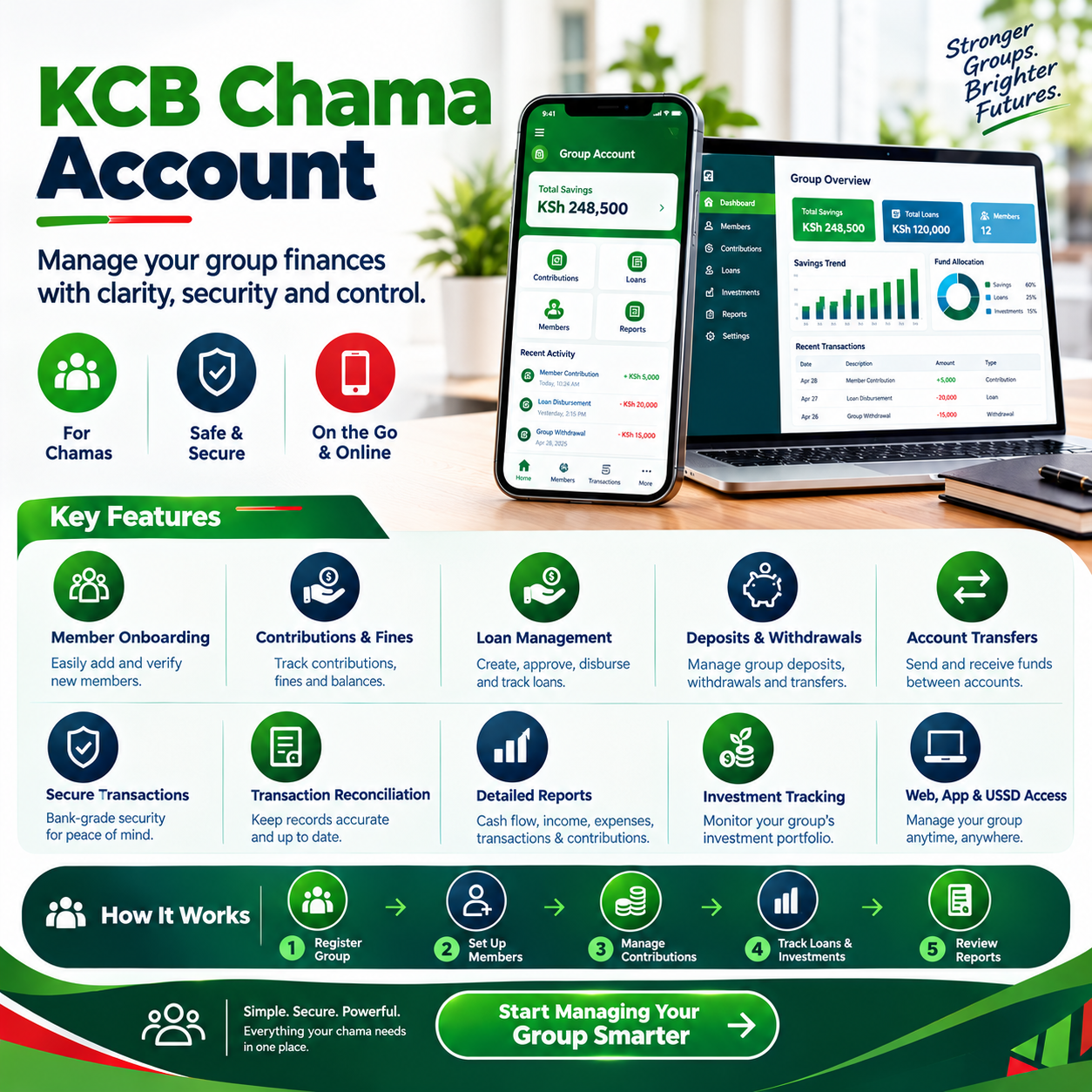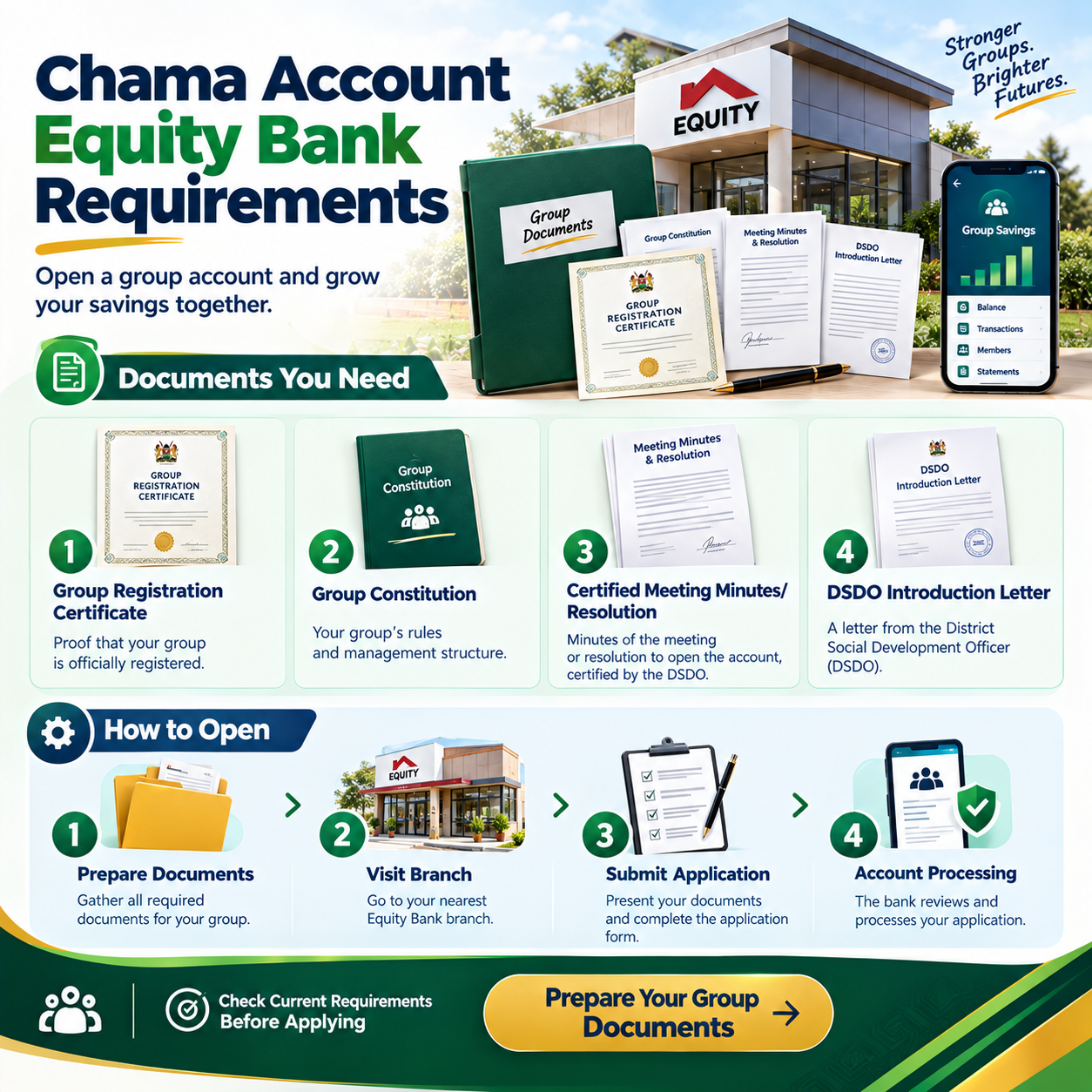
Role-based access for groups is the security discipline that decides who can view, edit, approve, and administer a group’s digital records — and it has quietly become the most important governance feature in Kenyan group finance. As chamas, welfare societies, and investment clubs move their money records onto digital platforms, the question of permissions stops being technical and becomes deeply institutional. Who can see member balances, who can approve a disbursement, and who can change the constitution’s settings are questions that role-based access for groups answers with structure rather than trust alone.
The traditional answer to access control was informal. The treasurer held the notebook, the secretary held the file, and everyone else relied on goodwill and proximity. That arrangement worked while records were physical, but the moment groups moved online, the old habits became dangerous — because a shared password gives every member the power of every official. Structured role-based access for groups is the modern replacement for that fragile informality.
This guide is the complete walkthrough of that discipline. It explains what role-based access actually means, why shared logins destroy groups, which roles Kenyan groups typically need, and how to configure permissions that protect both money and people. By the end, implementing role-based access for groups will feel like a governance upgrade your group can complete in one meeting rather than a technical project requiring experts.
The article is written for chairpersons who carry ultimate accountability, treasurers who handle the most sensitive data, and secretaries who manage the records everyone depends on. It is equally written for ordinary members who deserve privacy around their own financial details. Everyone in the group is protected when role-based access for groups is configured deliberately.
One truth deserves stating before anything else. Access control is not about distrust — it is about design. The healthiest groups are precisely the ones where nobody, however trusted, holds unlimited power, and role-based access for groups is how that principle becomes enforceable rather than aspirational.
There is a second truth that follows close behind. Every group already practices role-based access in physical form, whether it realizes it or not. Only the treasurer signs checks, only the secretary files minutes, and only the chairperson calls votes. Digital systems simply need to mirror that existing structure, which is why role-based access for groups is a translation exercise rather than an invention.
The timing for this conversation could not be more relevant. Kenyan groups now hold their entire financial histories on platforms, and the consequences of a leaked password or a departing official with lingering access have grown from inconvenient to catastrophic. Groups that take role-based access for groups seriously protect not just their money but their members’ personal data.
So read this guide with your group’s current digital habits in mind. Note who currently holds passwords, who can see what, and where the gaps lie. By the final page, you will have a complete blueprint for role-based access for groups that fits your group’s structure exactly.
What Is Role-Based Access?
Role-based access is a security model where permissions attach to roles rather than to individuals. A person is assigned a role — treasurer, secretary, member — and the role defines what they can see and do within the system. When the person changes, the role transfers, and the permissions travel with the position rather than the personality. That separation between people and power is the founding logic of role-based access for groups.
The model solves a problem that shared logins create inevitably. When everyone uses one password, the system cannot know who did what, and accountability dissolves entirely. Individual accounts under role-based access for groups mean every action carries a name, a timestamp, and a role.
Think of the model as the digital version of a building with keyed doors. Some doors open for everyone, some only for officials, and one — the vault — only for specific signatures together. Designing that key map is the practical work of implementing role-based access for groups in any platform.
Three elements make up any access system. Subjects are the people, roles are the permission sets, and resources are the things being protected — records, figures, settings, and approvals. Understanding that trio makes every conversation about role-based access for groups immediately clearer.
The model also scales gracefully. A five-member group needs two or three roles, while a two-hundred-member federation needs six or seven, and the underlying logic never changes. That scalability is why role-based access for groups works identically for a welfare table and a property-owning investment club.
Finally, role-based access is a standard across the professional world. Banks, hospitals, and corporations all run on this model because it balances security with practicality. Groups adopting role-based access for groups are simply inheriting the same discipline that protects institutions a thousand times larger.
Why Shared Logins Destroy Groups
Before designing good access, understand precisely what shared logins cost. The damage runs deeper than most groups expect, and each cost below is drawn from real patterns that repeat across thousands of Kenyan groups.
The first cost is accountability collapse. When five people know one password, no action inside the system can be attributed to anyone, and every dispute becomes unresolvable. Individual accounts under role-based access for groups preserve the audit trail that settles disagreements with evidence.
The second cost is security exposure. A password shared among many people travels through chats, notes, and memories, and every additional holder multiplies the leak risk. Unique credentials are the baseline protection that role-based access for groups enforces structurally.
The third cost is privacy violation. Shared access means every member who logs in can see every other member’s balances, phone numbers, and loan histories. Role-limited views are the privacy guarantee that role-based access for groups provides to each individual member.
The fourth cost is succession chaos. When the shared-password holder leaves, the group must choose between keeping a departing person’s access alive or locking everyone out simultaneously. Clean role transfer is the administrative relief that role-based access for groups delivers during every official transition.
The fifth cost is accidental damage. Even honest users delete the wrong records or change the wrong settings when everyone holds admin powers, and no audit trail can undo what no trail recorded. Permission limits are the accident insurance built into role-based access for groups done properly.
The sixth cost is insider risk. The uncomfortable truth is that most financial misconduct in groups comes from people who already had legitimate access, and unlimited access simply widens that surface. Least-privilege design is the professional standard that role-based access for groups brings from the corporate world to group finance.
The pattern across all six costs is identical. Shared credentials collapse the boundary between members and officials, and that boundary is precisely what group governance depends on. Restoring it through role-based access for groups is therefore a governance act, not an IT task.
The Standard Roles Kenyan Groups Need
Roles should mirror the group’s actual structure, and Kenyan groups share a remarkably consistent official architecture. The roles below cover nearly every group, and any platform implementing role-based access for groups should support all of them natively.
The chairperson role comes first. Chairpersons need full visibility across the group, approval authority over major actions, and the power to convene and close processes. Oversight without day-to-day editing is the typical shape of the chairperson role in role-based access for groups configurations.
The treasurer role is the most powerful and the most constrained. Treasurers need deep access to financial records, disbursement functions, and reconciliation tools — but not the power to change the constitution, alter their own limits, or erase history. That deliberate tension is the design wisdom at the heart of role-based access for groups for financial roles.
The secretary role manages the records layer. Secretaries capture minutes, maintain member registers, and handle communications, without needing authority over money movement. Clear separation between records and money is a foundational principle of role-based access for groups.
The member role is the most important and most restricted. Members should see their own statements, their own loans, their own fines, and the group’s public announcements — and nothing about anyone else. That personal-scope view is the privacy core of role-based access for groups as members experience it.
Committee or sub-roles serve larger groups. Welfare officers, project leads, and audit committees each need scoped access to their own domains without inheriting full official powers. Granular sub-roles are the scalability feature that distinguishes mature platforms implementing role-based access for groups.
Auditor or observer roles deserve special mention. Read-only access lets trusted reviewers verify everything and change nothing, which is exactly what independent oversight requires. Observation-only permissions are a governance gift that well-designed role-based access for groups makes effortless.
Finally, the administrator role configures the system itself. Who holds admin rights, and how many people hold them, deserves more care than any other decision in role-based access for groups — because the admin can reshape every other role.
What Each Role Should See and Do
Turning roles into concrete permissions requires mapping every function to its rightful owner. The matrix below reflects best practice across Kenyan groups, and any serious implementation of role-based access for groups should follow its logic.
Member records deserve the first mapping. Members see their own profiles and edit their own contact details; officials see the full register; and only secretaries edit official fields. That graduated visibility is the entry-level example of role-based access for groups applied to daily data.
Financial figures follow. Contribution balances and loan positions are visible to the individuals concerned and to authorized officials, while welfare details remain within welfare-scoped roles. Sensitive-figure gating is the discipline that role-based access for groups enforces around the group’s most personal numbers.
Money movement demands the strictest mapping. Viewing transactions is one permission, initiating disbursements is another, and approving them is a third — and the three should sit in different hands wherever possible. Separation of duties is the anti-fraud cornerstone of role-based access for groups.
Configuration powers belong almost exclusively to administrators. Changing contribution amounts, fine rules, and role definitions should require admin authority, recorded permanently. Locked-down configuration is what keeps the group’s rules safe inside role-based access for groups.
Approvals deserve their own tier. Loans, waivers, and large expenditures should require designated approvers, with every approval logged irreversibly. Decision-trail architecture is the governance payoff of role-based access for groups applied to money decisions.
Reports complete the mapping. Members access their own statements on demand, officials access group-wide reports, and exports belong to a protected few. Controlled output is the data-protection finish of a complete role-based access for groups design.
Key Features of Strong Role-Based Access
Not every platform implements permissions equally, and the features below separate genuine systems from superficial ones. Test every candidate against this list before your group commits.
Individual accounts with unique credentials come first. Every person needs their own login, protected by a strong password and, ideally, an additional verification step. Unique identity is the non-negotiable foundation of role-based access for groups.
Granular permissions come second. The system should control view, create, edit, approve, and delete as separate switches rather than an all-or-nothing switch. Fine-grained control is what makes role-based access for groups fit each group’s real structure.
Role templates come third. Pre-built configurations for chairperson, treasurer, secretary, and member should exist, so groups start from best practice rather than blank pages. Sensible defaults are the adoption accelerator of a well-designed role-based access for groups system.
Complete audit trails come fourth. Every login, every edit, every approval, and every configuration change should be recorded with a name and a timestamp. Permanent accountability is the evidence engine of role-based access for groups in daily operation.
Instant role transfer comes fifth. When an official changes, permissions should move through a formal handover process within minutes, with the old access revoked simultaneously. Clean transitions are the succession relief that role-based access for groups provides at every leadership change.
Approval workflows come sixth. Multi-step approvals should route automatically to the right officials, with each step attributed and logged. Routed authority is the decision-integrity feature of serious role-based access for groups implementations.
Deactivated access comes seventh. Members who exit the group should lose access immediately while their historical records remain intact for audits. Clean exits are the lifecycle discipline of role-based access for groups applied to departing members.
Offline and mobile parity comes eighth. Permissions must hold identically on phones, on offline entries, and on every device the group uses. Consistent enforcement everywhere is the reliability mark of a mature role-based access for groups system.
Together these features form a complete security architecture. Missing any one creates a gap that misuse or accident eventually finds. Completeness is what separates genuine role-based access for groups from a login screen with ambitions.
Role-Based Access Across Group Types
Different group formats stress permissions differently, and the adaptations below keep access control relevant across every common Kenyan structure. Mature platforms flex to serve each one natively.
Welfare societies need the most sensitive scoping. Member health circumstances, bereavement details, and payout records belong within welfare-officer visibility alone, invisible even to other officials. Compassion-driven privacy is the defining configuration of role-based access for groups for welfare-first groups.
Lending groups need guarantor-gated visibility. Guarantee exposure should be visible to the guarantors concerned and to loan officials, not broadcast across the membership. Credit-privacy layering is the lending-specific depth of role-based access for groups for active lenders.
Diaspora groups need borderless enforcement. Permissions must hold identically for members in Nairobi, London, and Toronto, with no local loopholes. Time-zone-proof consistency is a natural strength of cloud-based role-based access for groups.
Table banking circles need rotation-scoped access. Who received the pot and what is expected next cycle should be visible to all, while individual balances remain personal. Mixed transparency is the balanced configuration of role-based access for groups for rotating groups.
Property-owning groups need two streams separated. Member contribution data and tenant payment data serve different audiences and deserve different permission maps, with property records typically handled in a dedicated system. Many such groups pair their group platform with Tas.co.ke, which manages tenants, rent collection, and owner statements under its own access structure, keeping role-based access for groups clean on both fronts.
How to Implement Role-Based Access in Your Group
Implementation succeeds when it is treated as governance rather than technology. The sequence below carries groups from shared-password habits to structured access without a single argument. Each step builds confidence for the next.
Begin by documenting the current reality. List every person who currently holds any login, every shared password in circulation, and every record anyone can currently see. That honest audit is the starting map for redesigning role-based access for groups across the group.
Next, define the role map formally. Match each role to its permissions using the structures described earlier, and present the map to the committee for approval. Minuted role definitions are the governance seal on any implementation of role-based access for groups.
Create individual accounts for everyone afterward. Each member receives unique credentials, and every shared password is retired the same day. The coordinated switch is the single most important moment in deploying role-based access for groups across any group.
Train each role on its own view. Members learn what they can see, officials learn what they can do, and administrators learn what they must protect. Scoped training is the adoption method that makes role-based access for groups feel natural rather than restrictive.
Review the configuration quarterly afterward. Roles drift as people join, leave, and change duties, and scheduled reviews catch every drift while it is harmless. Periodic audits are the maintenance rhythm of healthy role-based access for groups over years.
Common Mistakes to Avoid
The first classic mistake is creating too many administrators. When five people can change everything, the system’s rules are only as stable as its least careful admin. One or two admins with named backups is the recommended posture within role-based access for groups.
The second mistake is granting access by seniority instead of function. Long-serving members are not automatically entitled to treasurer-level visibility, and mixing the two concepts corrupts both. Function-based permissions are the correct lens for every decision about role-based access for groups.
The third mistake is forgetting departing members. A former official whose access lingers for months is the most common security hole in Kenyan group systems. Immediate revocation is the exit discipline that completes any role-based access for groups lifecycle.
The fourth mistake is over-securing to the point of dysfunction. If the treasurer cannot complete routine work without escalating for permission, officials will quietly share logins again. Balanced friction is the usability wisdom that keeps role-based access for groups sustainable in practice.
Real Stories from Kenyan Groups
The Nakuru teachers’ chama discovered the value of role limits through a near miss. A treasurer’s phone was stolen, and because the thief could only ever see what a treasurer sees — and nothing could be moved without a second approval — the incident ended as an inconvenience rather than a catastrophe. That containment, they say, was the payoff of configuring role-based access for groups before they ever needed it.
The Kitengela landlords’ group runs two permission worlds side by side. Group finances operate under structured official roles while tenant records, rent collection, and owner statements run on Tas.co.ke under their own access map. One connected ecosystem with clean boundaries on both sides is the complete expression of role-based access for groups for diversified groups.
Frequently Asked Questions
What is the difference between role-based access and shared passwords? Role-based access gives each person unique credentials with permissions matching their function, while shared passwords give everyone everything and record nothing. The difference is the entire distance between accountability and chaos, which is why serious groups adopt role-based access for groups as standard practice.
How many administrators should a group have? One primary administrator with one named backup is the recommended posture, because every additional admin widens the surface that can reshape the group’s rules. That restraint is a core recommendation within role-based access for groups best practice.
What happens to a member’s access when they leave the group? Their access should be revoked immediately through the formal exit process, while their historical records remain intact and auditable. Clean exits paired with preserved history are the lifecycle standard of role-based access for groups.
Can members see each other’s balances in a well-configured system? No — each member sees their own figures, while group-wide visibility belongs to authorized officials only. That personal-scope privacy is the foundational promise of role-based access for groups as members experience it daily.
How often should roles be reviewed? Quarterly is the professional rhythm, with immediate reviews at every official change, member exit, or platform update. Scheduled audits are the maintenance discipline that keeps role-based access for groups aligned with the group’s reality.
Where does Tas.co.ke fit in? Tas.co.ke runs contributions, loans, fines, statements, and welfare records under structured role-based permissions, so treasurers, secretaries, chairpersons, and members each see exactly what their role requires. Groups that run on Tas.co.ke get role-based access for groups built into every feature — and the same permission structure extends to tenants and rent when the group owns property.