Chama Investment Tracking Kenya: A Practical Guide for Groups
October 9, 2026 · mitchelle mwaura
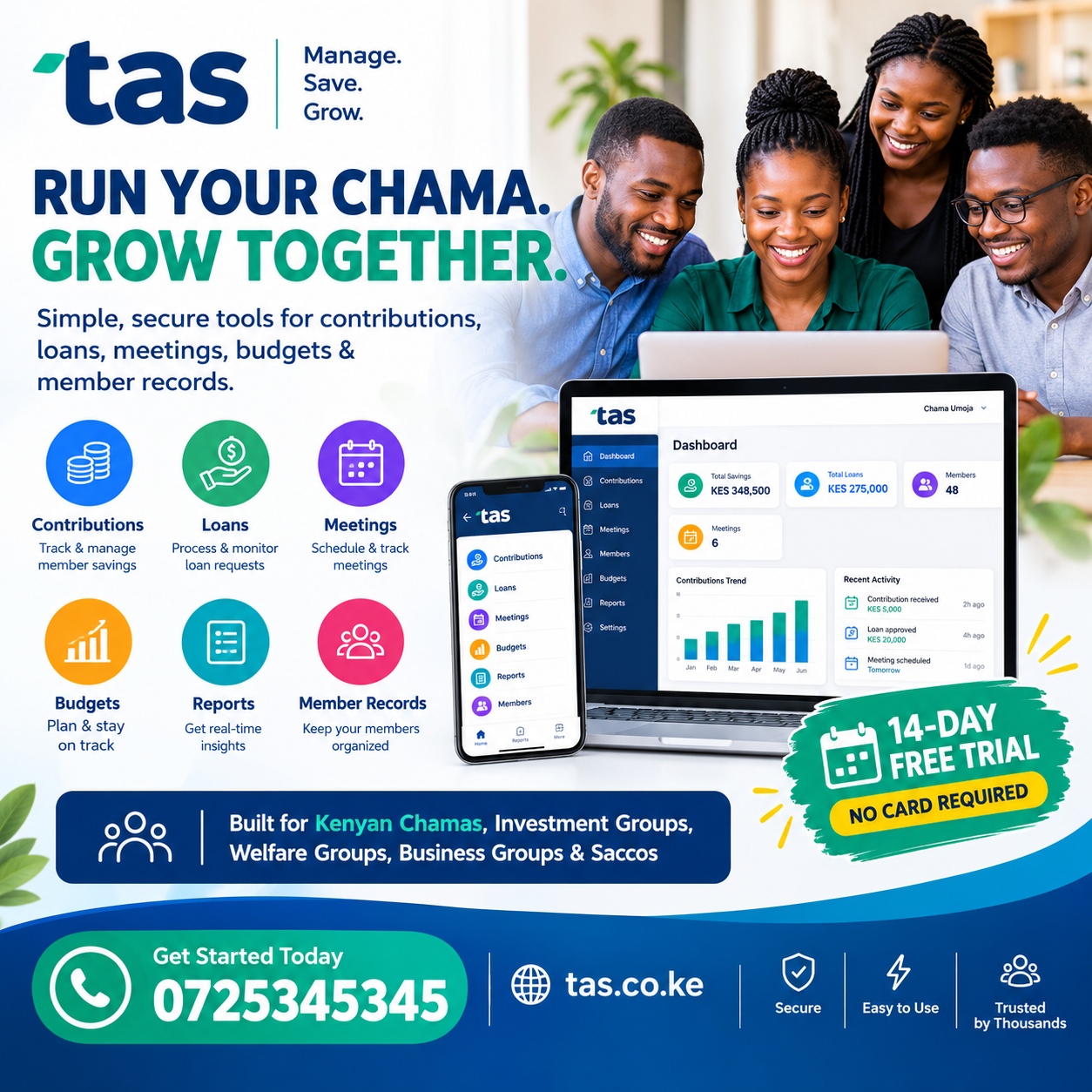
Understanding Chama Investment Tracking in Kenya
A chama can build substantial wealth over time, but only when its members understand how money enters the group, where it goes, what it earns and how the results are shared. Chama Investment Tracking Kenya is a practical approach to recording and monitoring these financial activities so that members can make decisions using reliable information rather than estimates, memory or incomplete notebooks.
For a savings and investment group, tracking investments means more than checking the bank balance at the end of the month. It involves documenting member contributions, recording purchases, monitoring assets, identifying expenses, calculating returns and communicating the group’s financial position. A group may collect contributions consistently and still struggle to understand whether its investments are profitable if these activities are not recorded properly.
Digital recordkeeping tools, including solutions available through Chama Investment Tracking Kenya, can help groups organise their records and make financial information easier to access. The right approach depends on the group’s size, investment strategy, reporting needs and members’ ability to use digital systems.
This guide explains how Kenyan chamas can track investments, manage contributions, measure returns, control expenses, improve accountability and select appropriate software. It is intended for chama officials, treasurers, investment committees, accountants and members who want their groups to grow sustainably.
1. What Is Chama Investment Tracking?
Investment tracking is the systematic process of recording, monitoring and evaluating money that a group commits to income-generating activities. It allows members to establish how much they invested, what each investment is worth, what income it generates and whether the group is achieving its objectives.
For example, a chama may contribute money towards a rental property, purchase government securities, invest in a business, acquire agricultural assets or maintain a diversified investment portfolio. Each activity has different costs, risks, timelines and income patterns.
A well-organised Chama Investment Tracking Kenya process gives the group a consistent way to monitor these activities.
What should be tracked?
A practical investment register should contain:
-
Investment name and category.
-
Date the investment was made.
-
Amount committed and amount paid.
-
Source of the funds.
-
Ownership details and supporting documents.
-
Expected income and payment dates.
-
Actual income received.
-
Expenses related to the investment.
-
Current estimated value, where it can be reasonably established.
-
Outstanding obligations or liabilities.
-
Investment status and responsible committee member.
These details create a record that can be reviewed by officials and ordinary members. They also make it easier to investigate differences between expected and actual performance.
Investment tracking versus ordinary bookkeeping
Bookkeeping records financial transactions. Investment tracking uses relevant financial information to evaluate the group’s investments and understand their performance.
The two activities overlap, but they answer different questions.
|
Activity |
Main question answered |
|---|---|
|
Contribution tracking |
How much has each member paid? |
|
Expense tracking |
What has the group spent? |
|
Cashbook management |
What money came in and went out? |
|
Investment tracking |
How are the group’s investments performing? |
|
Financial reporting |
What is the group’s overall financial position? |
|
Budget monitoring |
Are actual results consistent with the plan? |
A chama benefits most when these records work together instead of being maintained as disconnected documents.
2. Why Kenyan Chamas Need Better Investment Records
Chamas often begin with a simple objective: members contribute regularly and use their combined savings to achieve something that would be difficult individually. As the group grows, however, the financial arrangements become more complicated.
A group with five members and one savings account may manage its records with a basic spreadsheet. A group with dozens of members, several investments, loans, property income and multiple bank accounts needs a more structured process.
A reliable Chama Investment Tracking Kenya approach helps address several common challenges.
Unclear investment performance
Suppose a group invests KSh 600,000 in a small business. During the year, it receives KSh 120,000 in sales proceeds attributable to its investment. It also pays KSh 35,000 in expenses.
The group should not automatically conclude that its investment earned KSh 85,000 in profit. Sales proceeds may include the recovery of working capital, and the business may have other costs, liabilities or unsold stock.
Proper accounting is necessary to distinguish revenue, expenses, cash flow, changes in asset values and actual profit.
Disagreements among members
Financial misunderstandings can arise when different officials maintain separate records or when members receive inconsistent figures.
An investment register, supported by receipts, bank statements and approved meeting minutes, provides a shared reference point. Members can review transactions without relying entirely on an official’s personal notes.
Difficulty planning future investments
Without accurate information, a chama may commit funds that it needs for upcoming expenses, loan repayments or existing projects.
Tracking investments alongside cash flow helps officials identify money that is available for new opportunities and money that should remain reserved.
Limited accountability
A group needs to know who authorised an investment, who handled the transaction and who is responsible for monitoring the outcome.
Clear documentation creates accountability without assuming that every discrepancy is evidence of wrongdoing. It also protects responsible officials by making their decisions easier to verify.
3. How Investment Tracking Software Supports a Chama
Spreadsheets and paper registers can be useful, particularly for small groups. However, they become harder to maintain when transactions increase, several officials share responsibilities or reports must be prepared regularly.
A suitable Chama Investment Tracking Kenya workflow can help standardise records and reduce repetitive administrative tasks.
Centralised investment records
Instead of keeping investment details in separate books, the group can maintain a central register that identifies each investment and its supporting documents.
Officials should be able to determine the investment’s original cost, subsequent payments, income received and relevant outstanding obligations.
Consistent transaction recording
A digital system can provide standard fields for dates, amounts, transaction categories, payment references and descriptions.
This consistency makes reports easier to prepare and helps officials identify missing information.
Member contribution visibility
Where the software supports member accounts, officials can compare expected contributions with actual payments.
Members may also receive access to appropriate summaries, depending on the group’s rules and the system’s permissions.
Financial reports
Reporting features can bring together information about contributions, expenses, investment income and outstanding commitments.
The usefulness of a report depends on the accuracy of the underlying records. Software cannot compensate for transactions that were never entered or expenses that were deliberately misclassified.
A clearer audit trail
A good system should preserve transaction history and identify authorised changes. This makes it easier to review corrections and understand why a financial figure changed.
Before selecting a platform, a chama should confirm which features are actually available rather than assuming every product offers the same capabilities.
4. Establishing an Investment Register
The investment register is one of the most important records a chama can maintain. It provides a consolidated view of the group’s investments and the information required to monitor each one.
A structured Chama Investment Tracking Kenya register should be designed around the group’s actual activities.
Step 1: Identify each investment
Give every investment a unique reference number. For instance, a group could identify a rental property as INV-001, a securities portfolio as INV-002 and a farming project as INV-003.
Unique references prevent confusion when several investments have similar names.
Step 2: Record the original commitment
Document the date, approved amount, amount paid and source of funding. Attach the relevant approval record and payment evidence.
If members contribute money specifically for a project, the register should distinguish those funds from general savings where the group’s accounting arrangements require that separation.
Step 3: Record income and costs
Record rental income, interest, dividends, business distributions and other receipts according to their actual nature.
Similarly, document relevant expenses, such as repairs, transaction charges, management fees and other legitimate costs.
Step 4: Update investment status
An investment may be proposed, approved, active, under review, disposed of or closed.
A clear status helps members understand which projects require attention and prevents old or completed investments from remaining on active reports indefinitely.
Step 5: Reconcile the information
Compare the register with bank statements, payment confirmations, contracts and other independent evidence.
Reconciliation should happen regularly, not only when the annual accounts are being prepared.
5. Tracking Member Contributions and Investment Capital
A chama’s investments depend on the capital available to it. That makes contribution tracking an essential part of investment management.
The amount a member has promised to contribute is not necessarily the same as the amount received. Similarly, a member’s contribution towards a particular project may differ from their ordinary monthly savings.
An effective Chama Investment Tracking Kenya process should distinguish these amounts clearly.
Separate commitments from payments
Suppose 15 members agree to contribute KSh 5,000 each per month towards an investment project.
The expected monthly contribution is KSh 75,000. If only 13 members pay in full, the group receives KSh 65,000 and has KSh 10,000 outstanding.
A contribution report should show all three figures: expected contributions, actual receipts and outstanding amounts.
Use consistent payment references
Where members pay through M-Pesa or bank transfers, officials should capture available transaction references and match them against the relevant member accounts.
A payment message alone should not automatically be treated as proof that the group has received the money. The treasurer should verify the transaction against the appropriate account records.
Distinguish different types of member funds
A chama may maintain ordinary savings, project contributions, emergency funds and money intended for a specific investment.
These categories should be recorded according to the group’s approved rules. This prevents officials from unintentionally treating restricted project funds as money available for unrelated expenditure.
Document changes in membership
When a member joins, leaves or changes their contribution arrangement, the group should document the effective date and any approved financial settlement.
This is especially important when investments are held for several years and members’ interests may change during that period.
6. Measuring Investment Returns Correctly
An investment can produce cash income, appreciate in value or generate a combination of both. It can also lose money.
A group should therefore avoid judging an investment solely by the amount of cash received.
A useful Chama Investment Tracking Kenya framework measures performance using figures appropriate to the investment.
Net investment income
A simple starting point is:
Net investment income = investment income − related expenses
For example, suppose a chama receives KSh 90,000 in rental income and incurs KSh 25,000 in eligible operating expenses during a particular period.
Its net operating income for that calculation is KSh 65,000, before any other costs or adjustments that may apply.
This figure is more informative than gross rental receipts alone, but it should not automatically be treated as the final accounting profit or the return on the property’s purchase price.
Return on investment
A basic return on investment calculation is:
ROI = net gain ÷ initial investment × 100
Suppose a chama invests KSh 200,000 in an activity and later records a net gain of KSh 30,000 attributable to that investment.
The simple ROI is 15%, assuming the figures are measured on a consistent basis and no relevant costs or additional capital contributions have been omitted.
For investments held over different periods, the group should consider the duration of the investment. A 15% return over several years is not directly comparable to a 15% return over a few months.
Cash income versus changes in value
Some investments generate regular cash payments. Others produce returns mainly through changes in their market value.
For example, a property may increase in estimated value while producing limited rental income. That increase should not be confused with cash available to distribute to members.
Valuation methods should be documented, and estimates should be clearly distinguished from realised proceeds.
Compare investments fairly
The group should compare investments using consistent reporting periods, appropriate measures of risk and the same treatment of relevant expenses.
A project with a higher potential return may also have greater uncertainty, less liquidity or higher operating costs.
Investment decisions should consider these differences instead of relying on headline percentages alone.
7. Managing M-Pesa and Bank Transactions
Digital payments have made it easier for members to contribute to chamas and for officials to collect transaction evidence. However, convenience does not eliminate the need for reconciliation.
A practical Chama Investment Tracking Kenya process should connect payment records to the chama’s accounting records.
Record every receipt
For each payment, capture the amount, date, payer where identifiable, transaction reference and purpose.
If a member sends money without indicating whether it is a contribution, loan repayment or project payment, the treasurer should confirm its intended classification before finalising the entry.
Record transfers accurately
Moving money from one chama account to another does not, by itself, create income or an expense.
For example, transferring KSh 100,000 from a bank account to a payment account should be recorded as a transfer between accounts, rather than as an additional contribution.
Incorrect classification can inflate reported income and distort the group’s financial position.
Reconcile regularly
A reconciliation process should compare the records maintained by the chama with the statements provided by its payment service providers or banks.
Officials should investigate:
-
Payments appearing in statements but missing from the register.
-
Entries recorded twice.
-
Differences in transaction amounts.
-
Payments assigned to the wrong member.
-
Charges that have not been recorded.
-
Transfers that appear on only one account’s records.
Protect payment credentials
Chamas should never share payment PINs, passwords or authentication codes through an unrestricted group chat.
Access to payment accounts should be limited to authorised people, and changes in officials should trigger a prompt review of access permissions.
8. Tracking Expenses Without Losing Sight of Profit
Investment income is only one side of the financial picture. Costs can gradually reduce returns if the group does not record and review them.
An organised Chama Investment Tracking Kenya process should make expenses visible at both investment and group level.
Categorise expenditure
Useful categories may include:
-
Investment acquisition costs.
-
Repairs and maintenance.
-
Professional services.
-
Transport and administration.
-
Bank and transaction charges.
-
Insurance, where applicable.
-
Taxes and statutory obligations, where applicable.
-
Operating costs of income-generating businesses.
The appropriate categories depend on the group’s activities and accounting policies.
Require supporting evidence
Expenses should normally have receipts, invoices, payment records or other relevant documentation.
If an expense is paid in cash and supporting documentation is unavailable, the official should record the circumstances and obtain the approval required under the group’s procedures.
Establish approval limits
A chama can adopt spending limits that determine which transactions an official may approve and which require committee or member approval.
For example, ordinary administrative expenses may follow one approval process, while the purchase of a major asset may require a formal resolution.
The limits should be written down and applied consistently.
Review recurring expenses
Recurring fees and small charges can accumulate over time. Officials should review these costs periodically and determine whether they remain necessary.
Reducing unnecessary expenditure can improve the amount available for reinvestment, but essential maintenance, compliance and security costs should not be neglected simply to make a report appear more profitable.
9. Monitoring Property Investments
Property is a common investment consideration for groups that want to build long-term assets. However, a property requires more than recording its purchase price.
A Chama Investment Tracking Kenya system used by a group investing in real estate should connect property records with financial performance.
Record acquisition information
Document the purchase price, completion date, ownership documentation, financing arrangements and other acquisition costs.
Where applicable, the group should obtain appropriate legal and professional advice before purchasing property or registering ownership.
Track rental receipts
Record rent billed, rent received, arrears and deposits separately.
Rent charged is not necessarily rent collected, and deposits may have different accounting and legal treatment from ordinary rental income.
Monitor maintenance
Record repairs, planned maintenance and major improvements separately where appropriate.
For example, a routine plumbing repair may be treated differently from a major renovation. The correct accounting treatment depends on the nature of the expenditure and the applicable accounting framework.
Review net performance
Consider rental receipts, vacancies, maintenance, insurance, management costs and other relevant expenses.
A property with high gross rent may still deliver a disappointing net return if expenses are high or tenants frequently fail to pay.
Monitor property documents
Maintain accessible records of ownership documents, leases, approvals, insurance documents and professional assessments.
Financial tracking is more reliable when officials can connect the figures to the underlying asset and its supporting records.
10. Tracking Business and Agricultural Investments
Some chamas invest in retail businesses, distribution, farming, livestock, equipment or other productive activities.
These investments require records that reflect their operating characteristics.
A suitable Chama Investment Tracking Kenya approach should capture both financial transactions and the information necessary to evaluate the project.
Business investments
For a retail or service business, the group may need to track sales, stock purchases, operating expenses, receivables, payables and cash movements.
Sales should not automatically be treated as profit. The cost of goods sold, operating costs and other applicable expenses must be considered.
If the chama is a shareholder in a separately operated business, its reporting should distinguish the company’s finances from the chama’s own accounts.
Agricultural investments
Agricultural projects may involve seed, fertiliser, labour, transport, equipment, land preparation, veterinary costs or irrigation.
Officials should record expenditure as it occurs and monitor relevant production information.
The timing of receipts is particularly important because agricultural income may be seasonal while expenses arise throughout the production cycle.
Livestock investments
For livestock projects, maintain records of purchases, identification where appropriate, feed, veterinary services, sales and other relevant costs.
The group should establish a suitable approach to valuation and obtain qualified advice where needed.
Equipment investments
Equipment may require records of purchase cost, location, usage, maintenance and disposal.
An asset register helps officials confirm that the equipment exists, identify who is responsible for it and evaluate its contribution to the investment.
11. Investment Diversification and Risk Management
A chama may be tempted to concentrate its savings in one opportunity because the project appears familiar or promises attractive returns.
Concentration can increase the impact of an adverse event. If a group invests most of its capital in one business, a serious business setback could affect the whole membership.
A Chama Investment Tracking Kenya approach should therefore help officials understand the distribution of assets and the risks associated with them.
Understand the main risks
Different investments face different risks.
-
Market risk: The value of an asset may fall.
-
Credit risk: A borrower or counterparty may fail to pay.
-
Liquidity risk: The group may be unable to convert an asset into cash quickly without a significant loss.
-
Operational risk: Poor management, fraud, equipment failure or other disruptions may affect results.
-
Concentration risk: Too much money may depend on one asset, industry or counterparty.
-
Legal and compliance risk: An investment may create obligations that the group has not properly understood.
Maintain an emergency reserve
A chama should estimate its upcoming obligations before committing money to investments that are difficult to sell.
A reserve can help cover administrative expenses, loan repayments, approved withdrawals and unexpected costs.
The appropriate amount depends on the group’s obligations, income patterns and risk tolerance.
Verify investment opportunities
Before committing funds, officials should examine the investment’s legal structure, expected cash flows, operating assumptions, fees and potential losses.
Promised returns should be treated as claims to verify, not guaranteed outcomes.
Where an opportunity involves regulated financial products, the group should verify the provider’s authorisation and understand the applicable rules.
Document risk decisions
Investment meeting minutes should record the reasons for choosing a project, the main risks considered and the approvals obtained.
This helps future officials understand the original decision and assess whether the investment remains suitable.
12. Preparing Accurate Financial Reports for Members
Members need reports that explain what happened to their money without requiring them to reconstruct transactions from several documents.
An effective Chama Investment Tracking Kenya reporting process should provide information that is understandable, timely and supported by evidence.
Monthly reports
A monthly report may include:
-
Opening cash and bank balances.
-
Contributions received.
-
Other receipts.
-
Expenses paid.
-
Investment income received.
-
Transfers between accounts.
-
Closing balances.
-
Outstanding member contributions.
-
Investment transactions and significant developments.
The report should distinguish cash movements from accounting profit and changes in estimated asset value.
Quarterly investment reviews
Quarterly reviews can focus on whether investments are performing according to expectations.
The committee may compare actual results with forecasts, review risks, identify delayed payments and recommend corrective action.
Not every investment needs the same performance measure. The report should explain the metric used and any important limitations.
Annual financial statements
Depending on the group’s legal structure and applicable requirements, annual reporting may involve a statement of financial position, income and expenditure information, cash flow reporting and supporting schedules.
A qualified accountant can advise on the appropriate reporting framework and any audit or review obligations.
Explain significant differences
Reports should not merely list numbers. They should explain material differences between budgeted and actual results.
For example, if rental income falls because a unit remains vacant, the report should state the reason, the effect on cash flow and any planned response.
This gives members the information they need to make decisions.
13. How to Choose Chama Investment Tracking Software
The best system is not necessarily the one with the largest number of features. It is the one that reliably supports the group’s financial processes and can be used consistently by authorised officials.
Before choosing a Chama Investment Tracking Kenya solution, define the problems that the group wants to solve.
Identify the group’s requirements
List the current activities that need to be recorded, such as member contributions, loans, investment purchases, income, expenses and reporting.
Separate essential requirements from features that may be useful later.
A small savings group may need straightforward contribution and cashbook functions, while a larger investment group may require multiple investment registers, document management and more detailed reports.
Assess usability
Treasurers and committee members should be able to learn the system without excessive difficulty.
Request a demonstration using realistic examples from the chama’s operations.
Check how easily officials can enter transactions, correct mistakes, search records and prepare reports.
Check security and permissions
Ask whether the system supports individual user accounts, role-based permissions, secure authentication and an appropriate record of changes.
The treasurer may need transaction-entry access, while other officials may only need review or approval rights.
Members should see only the information they are authorised to access.
Examine backups and data export
Ask how often data is backed up, how it can be restored and whether records can be exported in practical formats.
The group should avoid becoming dependent on a system that makes it difficult to retrieve its own financial history.
Understand the full cost
Evaluate subscription charges, implementation costs, training, support and any additional fees for particular features.
Request a clear explanation of what is included in the quoted price.
Verify the provider
Check the provider’s identity, support arrangements, terms of service and handling of financial information.
A demonstration and documented feature list are more useful than relying on marketing claims alone.
14. Moving from Paper Records to Digital Tracking
Digitising financial records is a process, not simply an exercise in copying old figures into software.
A chama should prepare its information carefully to avoid carrying errors into the new system.
A Chama Investment Tracking Kenya implementation plan can help the group move in manageable stages.
Step 1: Review existing records
Collect the current cashbook, contribution register, bank statements, investment records, receipts and relevant meeting minutes.
Identify missing documents and inconsistent balances before migrating the data.
Step 2: Agree on opening balances
Officials should establish the correct opening balances for each account and investment register as of an agreed date.
Any unresolved difference should be documented rather than concealed by inserting an unexplained adjustment.
Step 3: Clean member information
Standardise member names, identification references where legitimately required, membership status and contribution arrangements.
Handle personal information carefully and avoid collecting unnecessary data.
Step 4: Enter investments and transactions
Set up investment categories, accounts and approved opening balances.
Enter historical information to the level of detail needed for reliable reporting, while preserving access to original documents.
Step 5: Test reports
Prepare a sample report and compare it with independently verified records.
Check that transfers, contributions, expenses and investment income are classified correctly.
Step 6: Train officials
Ensure that the treasurer, secretary and other authorised users understand their responsibilities.
Written procedures can help maintain consistency when officials change.
Step 7: Review the first reporting cycle
After the first month or quarter, assess whether the system produces accurate and useful reports.
Correct process weaknesses early, and update training where necessary.
15. Governance and Internal Controls for Chamas
Good software is only one part of sound financial management. A group also needs rules that prevent errors, discourage misuse of funds and ensure that decisions are made with appropriate authority.
A Chama Investment Tracking Kenya governance framework should define responsibilities and provide independent checks.
Separate financial responsibilities
Where practical, the person proposing an investment should not have unrestricted control over its approval, payment and reconciliation.
For example, an investment committee may evaluate an opportunity, members may approve the commitment under the group’s rules, and the treasurer may execute the authorised payment.
Another authorised official should review the supporting records.
Smaller groups may not have enough members to separate every task fully, but they can still introduce independent review.
Require formal approval
Significant investments should be supported by the approvals required under the chama’s constitution or other governing documents.
Meeting minutes should record the decision, amount, purpose and any conditions.
Reconcile accounts independently
Bank and payment-account reconciliations should be reviewed by someone other than the person who prepared them, where feasible.
The reviewer should investigate differences and document their resolution.
Maintain an audit trail
Retain contracts, payment evidence, investment reports, resolutions and other relevant records for an appropriate period.
Use consistent file names and restrict access to sensitive documents.
Establish conflict-of-interest rules
Officials should disclose relevant personal interests in proposed investments, suppliers or transactions.
The group should follow its governance procedures to decide how the conflict will be managed.
Review officials’ access
When an official leaves office, remove or adjust access promptly and transfer relevant records to the authorised successor.
This protects the chama and the departing official by making responsibilities clear.
16. Common Investment Tracking Mistakes to Avoid
Even well-intentioned groups can produce misleading reports if their processes are inconsistent.
A Chama Investment Tracking Kenya review should identify and correct recurring mistakes.
Treating cash balance as total wealth
A chama may have little cash in its bank account because much of its money is invested in assets. Conversely, a high bank balance does not necessarily mean the group is profitable or free of liabilities.
Reports should show relevant assets, obligations and cash positions separately.
Recording the same transaction twice
A payment may appear in a bank statement, a payment confirmation and a manual cashbook entry. These are three pieces of evidence for one transaction, not three separate receipts.
Every transaction should have a clear reference and reconciliation process.
Ignoring outstanding obligations
An investment may appear profitable when unpaid bills, taxes, loan interest or other obligations have not been considered.
Financial reviews should include relevant liabilities and commitments.
Using unsupported valuations
Estimated values should be clearly labelled, dated and based on a reasonable method.
An optimistic estimate should not be presented as guaranteed money available for distribution.
Failing to update records
Late entries can cause members to make decisions based on outdated balances.
Set deadlines for recording transactions and reviewing reports.
Distributing money without checking liquidity
A group may have assets worth a substantial amount but insufficient cash to meet immediate obligations.
Before approving distributions, officials should assess cash availability, liabilities, investment restrictions and the group’s agreed rules.
Relying on one person’s records
Even a trustworthy treasurer can make mistakes or become unavailable.
Shared, controlled access and documented procedures help preserve continuity.
17. Understanding Investment Costs and Software Budgets
Chamas should evaluate both the cost of managing investments and the cost of the tools used to manage records.
A system’s price should be considered alongside its practical benefits, but projected savings should not be assumed without evidence.
A Chama Investment Tracking Kenya budget review should distinguish recurring costs from one-time expenses.
Direct investment costs
Depending on the activity, these may include purchase costs, transaction charges, legal services, professional advice, maintenance and administration.
Officials should identify costs that are certain and those that are estimates.
Administrative costs
The group may spend money on meetings, recordkeeping, communication, document storage and professional support.
Some of these costs may be small individually but material when added together over time.
Software costs
Potential software expenses include subscriptions, onboarding, training, data migration and optional integrations.
Ask providers to specify whether prices are charged per group, user, transaction or another measure.
Do not assume that a feature described during a demonstration is included in the standard subscription.
Evaluate value rather than price alone
A cheaper system may be suitable for a simple group, while a more capable platform may be justified for a group managing multiple investments.
The decision should reflect the complexity of the work, the quality of support and the risk of errors.
A pilot using actual transactions can help the committee make an informed decision before committing to a longer arrangement.
18. Legal, Tax and Compliance Considerations
A chama’s legal obligations depend on its structure, the activities it undertakes and the nature of its investments.
A group should not assume that every savings group, investment club, registered entity or cooperative is governed by identical requirements.
An effective Chama Investment Tracking Kenya process should make it easier to retrieve records required for appropriate professional advice and compliance.
Understand the group’s legal structure
Review the governing documents and establish whether the group operates as an informal association, registered self-help group, company, cooperative or another legal arrangement.
The structure can affect ownership, decision-making, reporting and the treatment of assets.
Keep tax records
Maintain records of income, eligible expenses, asset purchases, sales and other transactions relevant to tax reporting.
The tax treatment depends on the circumstances and applicable Kenyan law. A qualified tax professional can advise on the group’s particular obligations.
Check regulatory requirements
Before investing in regulated financial products or offering financial services, verify the relevant requirements and the status of the institution involved.
The group should not rely solely on a promoter’s claims that an opportunity is approved or risk-free.
Maintain proper ownership evidence
Keep contracts, title or registration documents where applicable, account records and formal resolutions.
For substantial investments, professional legal advice can help establish how ownership should be held and what happens when membership or leadership changes.
Protect personal information
Member records may contain personal and financial information. The group should restrict access, establish sensible retention procedures and understand applicable data-protection obligations.
Digital convenience should never come at the expense of members’ privacy.
19. A Practical Monthly Investment Tracking Routine
A consistent routine is often more useful than a complicated system that nobody updates.
Chama officials can introduce a monthly process that covers receipts, payments, investments and reporting.
A Chama Investment Tracking Kenya monthly checklist might look like this:
|
Timing |
Activity |
Responsible person |
|---|---|---|
|
During the month |
Record contributions and other receipts |
Treasurer or authorised officer |
|
During the month |
Record approved expenses and investment transactions |
Assigned officer |
|
Weekly or as needed |
Match payment references to member accounts |
Treasurer |
|
Month-end |
Reconcile bank and payment accounts |
Treasurer |
|
Month-end |
Review investment income, costs and outstanding items |
Investment committee |
|
Before the meeting |
Prepare financial reports |
Treasurer or accountant |
|
At the meeting |
Discuss performance, risks and decisions |
Committee and members |
|
After approval |
Record resolutions and assigned actions |
Secretary |
The precise timing can be adapted to the group’s size and activity.
Questions to ask during the monthly review
Officials should consider:
-
Did the group receive the expected contributions?
-
Are all significant transactions supported by evidence?
-
Do bank balances agree with the reconciled records?
-
Did investments generate the income that was expected?
-
Were any material expenses higher than budgeted?
-
Have investment risks changed?
-
Does the group have enough liquidity for upcoming obligations?
-
Are there decisions that require member approval?
These questions help move the discussion beyond a simple cash balance towards informed financial management.
20. Using Investment Reports to Make Better Decisions
Investment reports are most valuable when they influence decisions rather than simply being filed away.
A Chama Investment Tracking Kenya reporting process should provide information that helps members decide what to maintain, improve, expand or discontinue.
Compare actual performance with the original plan
When approving an investment, document the assumptions used to evaluate it.
These might include expected costs, projected income, the time required to generate returns and the conditions under which the group would reconsider the investment.
Review actual results against those assumptions at suitable intervals.
Investigate poor performance
If a project performs below expectations, determine whether the cause is temporary, operational or structural.
For example, low rental income may reflect vacancies, unpaid rent, seasonal demand or a mismatch between the original budget and actual costs.
The appropriate response depends on the cause rather than on the disappointing result alone.
Avoid decisions based only on past returns
An investment that performed well in the past may face new risks. Likewise, one disappointing period does not necessarily prove that a project is unsuitable.
Consider current conditions, future obligations, diversification and the group’s objectives.
Record decisions and follow-up actions
If members decide to reduce an investment, investigate an expense or negotiate a contract, record who is responsible and when the issue will be reviewed.
This turns reporting into an ongoing management process.
21. Frequently Asked Questions
1. What is Chama Investment Tracking Kenya?
It refers to the methods and tools used by Kenyan savings and investment groups to record their investments, monitor income and expenses, evaluate returns and report financial performance to members. The process may use paper registers, spreadsheets or dedicated software, depending on the group’s needs.
2. Why should a chama track its investments separately from contributions?
Contributions show how much money members provide, while investment records show how that money is deployed and what results it produces. Separating the information helps the group distinguish capital received from income earned and identify the performance of individual projects.
3. Can a small chama use a spreadsheet?
Yes. A spreadsheet can work for a small group with relatively few transactions, provided that records are accurate, access is controlled and backups are maintained. As the group grows, dedicated software may make reporting, reconciliation and record management easier.
4. How can a chama calculate investment profit?
The group should identify the income attributable to the investment and deduct the relevant expenses using a consistent accounting method. It should also consider outstanding liabilities, capital movements and valuation changes where applicable. A qualified accountant can help determine the appropriate treatment for complex investments.
5. Can M-Pesa transactions be included in investment reports?
Yes. Relevant M-Pesa receipts, payments and transfers can be recorded and reconciled with the chama’s accounts. Officials should capture available transaction references, verify the payments and classify them correctly instead of relying exclusively on message notifications.
6. How often should investment records be updated?
Transactions should generally be recorded promptly, while bank and payment accounts should be reconciled regularly. Many groups prepare monthly financial reports and conduct more detailed quarterly investment reviews. The appropriate frequency depends on transaction volume, investment risk and the group’s governance requirements.
7. What features should chama investment software have?
Useful features may include member contribution records, an investment register, income and expense tracking, account reconciliation, financial reports, user permissions, transaction history and data export. The group should verify which features are actually offered and choose according to its requirements.
8. How can a chama prevent misuse of investment funds?
It can establish approval limits, separate financial responsibilities where practical, reconcile accounts independently, maintain supporting documents and review transactions regularly. Controlled access and clear procedures for changes in leadership also help protect the group’s assets.
9. Should a chama invest all its savings?
Not necessarily. The group should consider upcoming expenses, liquidity requirements, risk tolerance and the possibility of unexpected costs. Committing every available shilling to an investment can leave members unable to meet approved withdrawals or other obligations.
10. How can a chama assess whether an investment is worth keeping?
Review its actual performance against the original assumptions, consider its risks and costs, and assess whether it still supports the group’s objectives. The decision should account for future prospects, liquidity, outstanding obligations and the consequences of selling or retaining the asset.
22. Building a Sustainable Investment Management Process
Successful investment management depends on consistent habits. A chama does not need to begin with a complicated financial system, but it does need reliable records, clear responsibilities and a commitment to reviewing results.
The first priority is to establish what the group owns, what it owes, how much capital members have contributed and how each investment is performing. Once these records are dependable, officials can improve budgeting, evaluate new opportunities and communicate financial information more clearly.
A well-designed Chama Investment Tracking Kenya process can help the group maintain this discipline by connecting investment records with receipts, payments, supporting documents and regular reports.
The group should also ensure that its members understand the difference between cash available, accounting profit and estimated investment value. These figures are related, but they are not interchangeable. Clear reporting prevents unrealistic expectations and helps members make decisions based on the actual financial position.
Technology can support this work, but the group still needs sound governance. Members should approve major investments through the agreed procedures, officials should document decisions, and financial records should be reviewed independently where possible.
Before adopting a new platform, compare its features, cost, security, support and data-export arrangements. Test it using realistic transactions and confirm that its reports agree with verified records.
Most importantly, treat investment tracking as an ongoing responsibility rather than an annual exercise. Regular monitoring allows the chama to identify problems earlier, understand its returns and adapt its strategy as circumstances change.
23. A Step-by-Step Action Plan for Chama Officials
Chama officials who want to improve investment management can begin with a straightforward action plan.
First, organise the existing records. Collect contribution registers, account statements, investment agreements, receipts and relevant meeting minutes. Identify gaps that need to be resolved.
Second, prepare a complete investment register. List each investment, its original cost, current status, related income, expenses and available supporting documents.
Third, establish consistent transaction categories. Agree on how to record member contributions, investment capital, income, expenses, loans, transfers and distributions.
Fourth, introduce a reconciliation schedule. Assign responsibility for checking account statements and investigating differences. Document any corrections.
Fifth, standardise member reports. Decide what information members should receive, how frequently reports will be prepared and who is responsible for presenting them.
Sixth, review internal controls. Establish approval procedures, access permissions, document-retention practices and arrangements for transferring responsibilities when officials change.
Seventh, evaluate software options. Compare available tools against the group’s actual needs, test their reporting capabilities and confirm their costs before adopting one.
Finally, review the process periodically. Ask members whether the reports are understandable, whether investment decisions are properly documented and whether the system is helping the group meet its objectives.
This practical approach makes it possible to improve financial discipline without requiring the chama to change every process at once.
Conclusion
Chamas can use collective savings to pursue meaningful financial goals, but long-term success requires more than regular contributions. Members need to understand how their money is invested, what income it produces, what costs reduce returns and what risks could affect the group’s future.
A reliable Chama Investment Tracking Kenya process brings these details together. It helps officials maintain investment registers, reconcile payments, track expenses, calculate performance and prepare reports that members can review with confidence.
The process should combine accurate bookkeeping, appropriate investment analysis, transparent governance and secure recordkeeping. Digital software can make these activities more manageable, particularly when a group has multiple investments or a growing membership, but it must be supported by clear procedures and regular reviews.
For a chama ready to improve its financial management, the next step is to review existing records, identify the most pressing reporting challenges and choose a tracking approach that fits the group’s needs. Consistent monitoring and evidence-based decisions provide a stronger foundation for sustainable growth than relying on estimates or informal records.
Chama Investment Tracking Kenya
Chama Investment Tracking Kenya
Chama Investment Tracking Kenya
Chama Investment Tracking Kenya
Chama Investment Tracking Kenya
Chama Investment Tracking Kenya
Chama Investment Tracking Kenya
Chama Investment Tracking Kenya
Chama Investment Tracking Kenya
Chama Investment Tracking Kenya
Chama Investment Tracking Kenya
Chama Investment Tracking Kenya
Chama Investment Tracking Kenya
Chama Investment Tracking Kenya
Chama Investment Tracking Kenya
Chama Investment Tracking Kenya
Chama Investment Tracking Kenya
Chama Investment Tracking Kenya
Chama Investment Tracking Kenya
Chama Investment Tracking Kenya
Chama Investment Tracking Kenya
Chama Investment Tracking Kenya
Chama Investment Tracking Kenya
Chama Investment Tracking Kenya
Chama Investment Tracking Kenya
Chama Investment Tracking Kenya
Chama Investment Tracking Kenya
Chama Investment Tracking Kenya
Chama Investment Tracking Kenya
Chama Investment Tracking Kenya
Chama Investment Tracking Kenya
Chama Investment Tracking Kenya
Chama Investment Tracking Kenya
Chama Investment Tracking Kenya
Chama Investment Tracking Kenya
Chama Investment Tracking Kenya
Chama Investment Tracking Kenya
Chama Investment Tracking Kenya
Chama Investment Tracking Kenya
Chama Investment Tracking Kenya
Chama Investment Tracking Kenya
Chama Investment Tracking Kenya
Chama Investment Tracking Kenya
Chama Investment Tracking Kenya
Chama Investment Tracking Kenya
Chama Investment Tracking Kenya
Chama Investment Tracking Kenya
Chama Investment Tracking Kenya